
2 posts tagged with "knowledge graph"

View All Tags

Building a Human Genotype-Phenotype Map


Genome-wide association studies have mapped thousands of genetic associations, but interpreting what those associations mean biologically remains a central challenge. In a new medRxiv preprint, Andrew Elmore, Aimee Hanson, Genevieve Leyden and colleagues introduce the Human Genotype-Phenotype Map (GPMap), an open resource for tracing shared genetic signals across complex traits and molecular measurements.
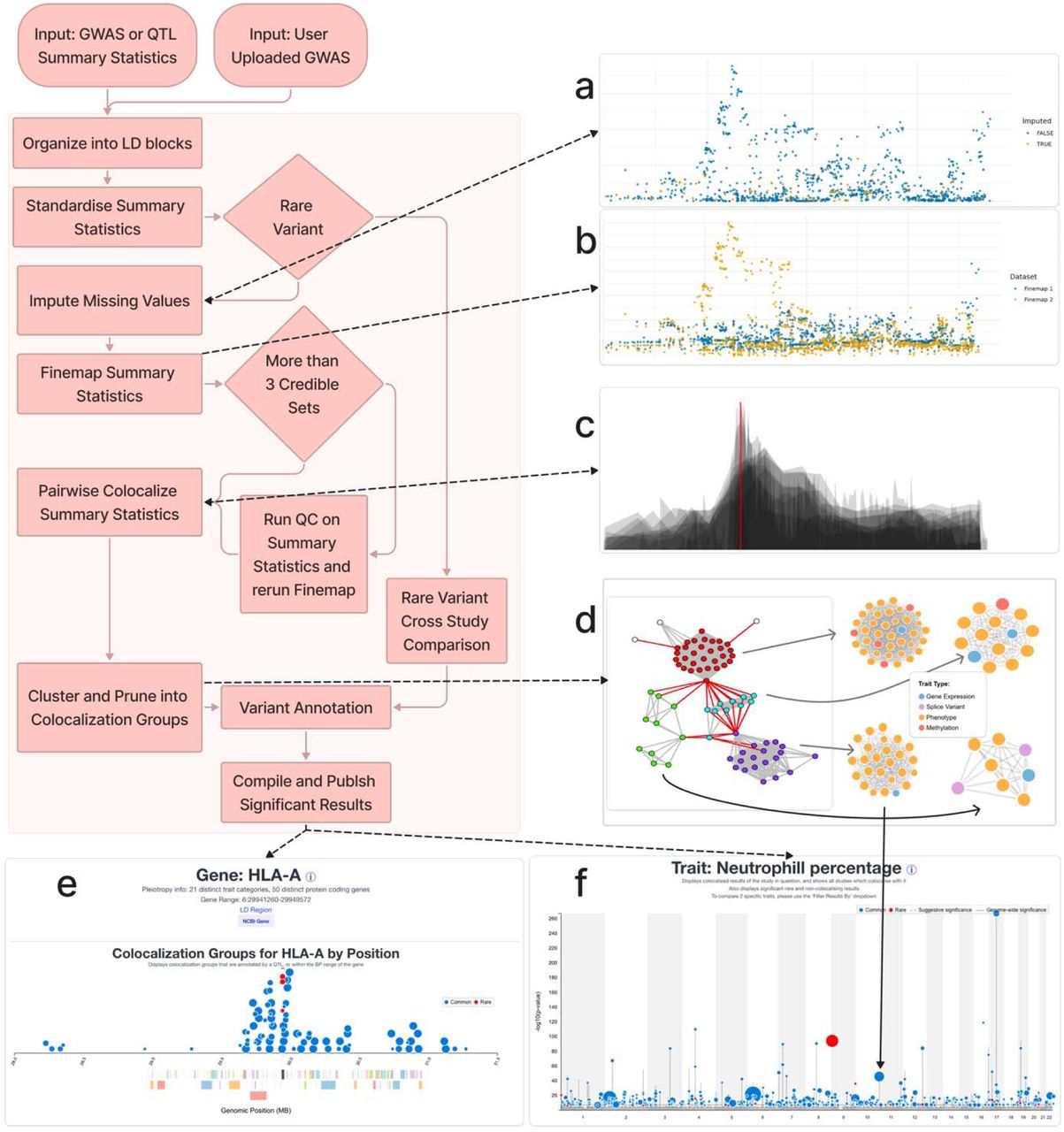
GPMap processing pipeline from GWAS summary statistics to trait, gene, variant and tissue views.

Figure: GPMap processing pipeline, from GWAS summary statistics through imputation, fine-mapping, colocalisation and views by trait, gene, variant and tissue. Source: Elmore et al., medRxiv, 2026, Fig. 1 (CC BY-ND 4.0).
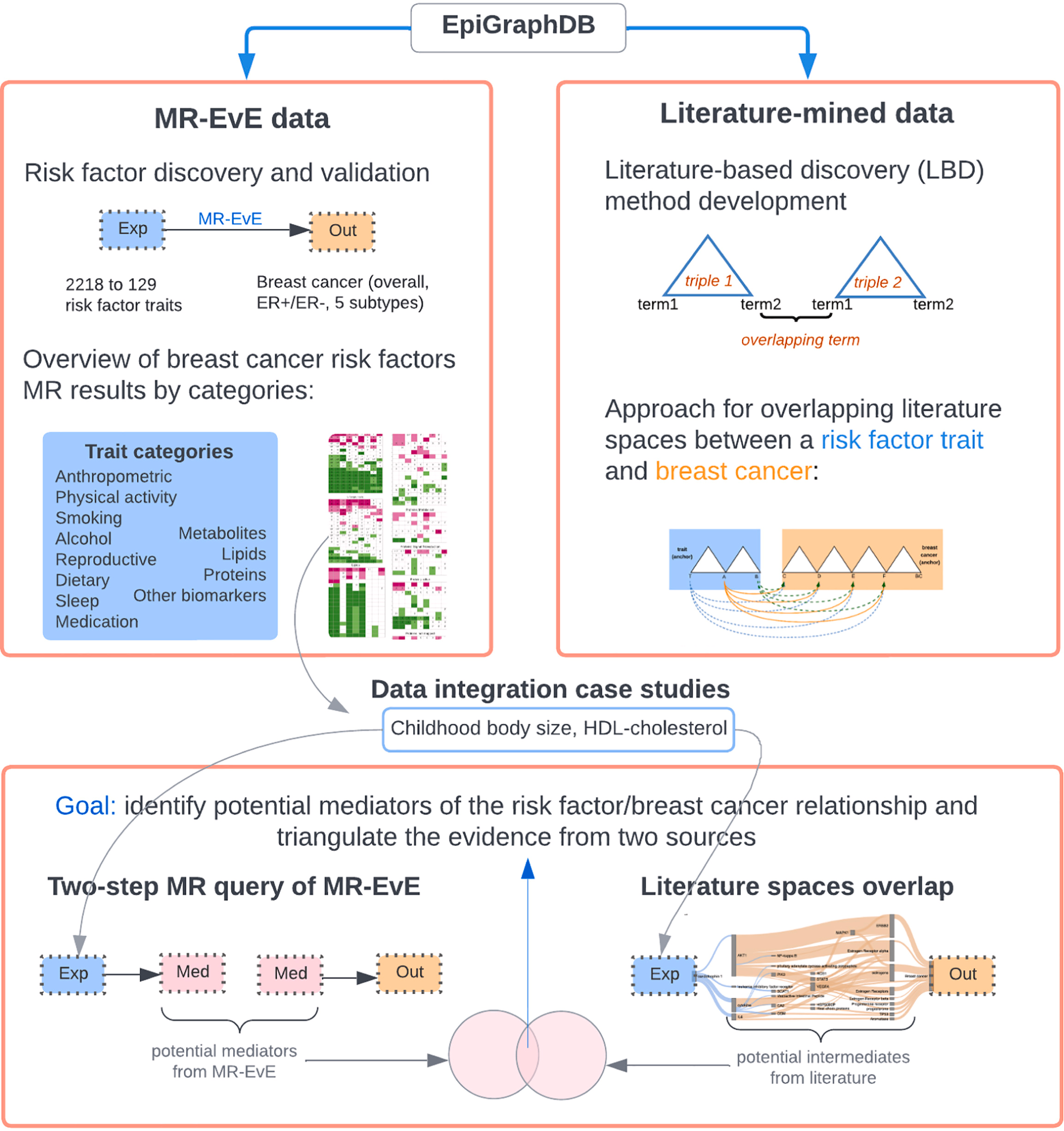
Integrating Mendelian randomization and literature mining to map breast cancer risk factors


Illustration of integrating MR and literature-mined evidence to identify breast cancer risk pathways.

Breast cancer research spans epidemiology, molecular biology, clinical trials, and a vast and rapidly growing literature. One challenge is triangulating across these evidence types: when different sources point in the same direction, we can be more confident we are seeing something causal rather than correlational.

In a paper led by Marina Vabistsevits published in the Journal of Biomedical Informatics, we show how to bring two complementary sources together:

  1. Mendelian randomization (MR) evidence generated at scale using MR-EvE (“Everything-vs-Everything”), and
  2. Literature-mined relationships stored in EpiGraphDB, our biomedical knowledge graph.