
4 posts tagged with "OpenGWAS"

View All Tags

Building a Human Genotype-Phenotype Map


Genome-wide association studies have mapped thousands of genetic associations, but interpreting what those associations mean biologically remains a central challenge. In a new medRxiv preprint, Andrew Elmore, Aimee Hanson, Genevieve Leyden and colleagues introduce the Human Genotype-Phenotype Map (GPMap), an open resource for tracing shared genetic signals across complex traits and molecular measurements.
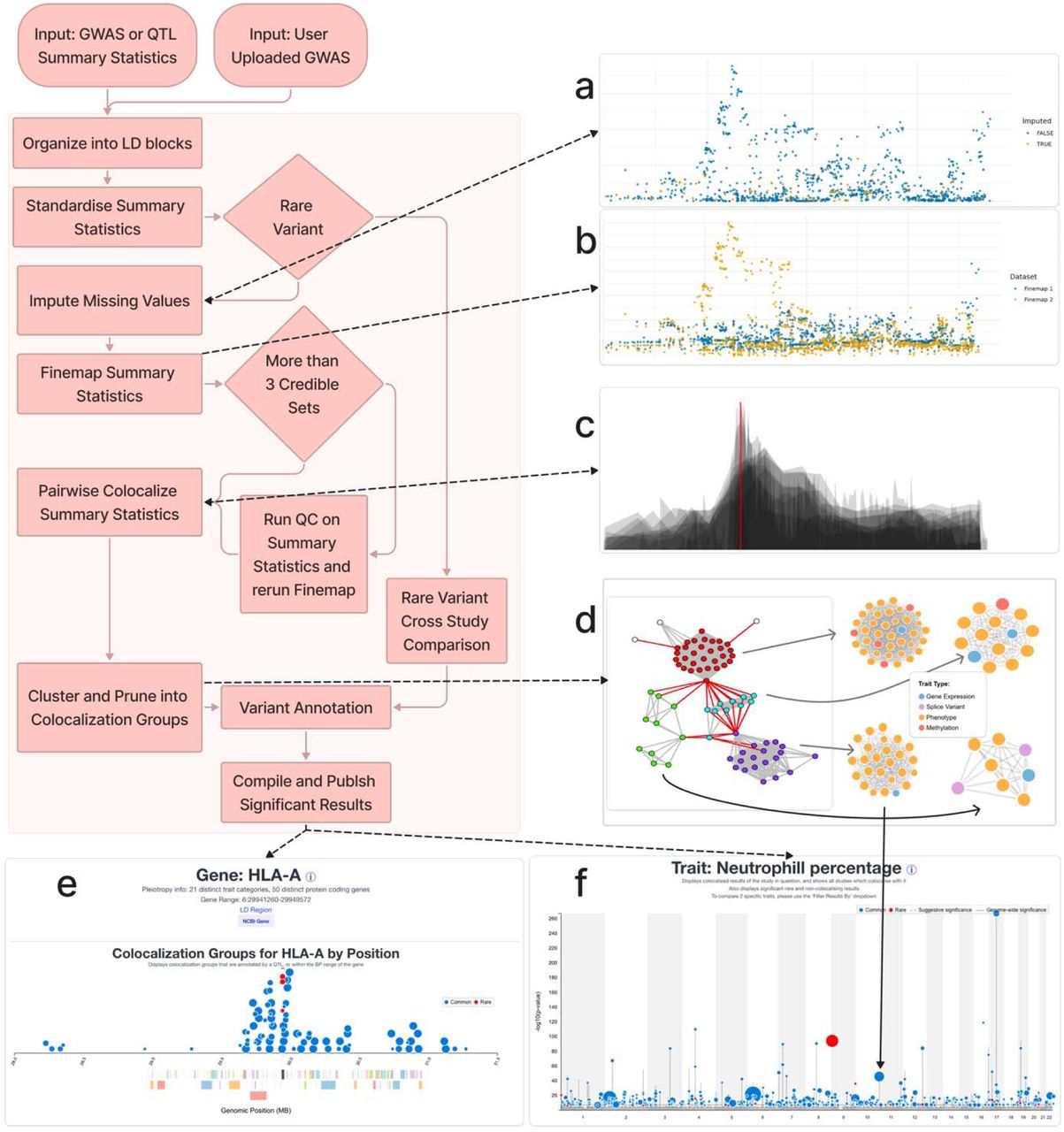
GPMap processing pipeline from GWAS summary statistics to trait, gene, variant and tissue views.

Figure: GPMap processing pipeline, from GWAS summary statistics through imputation, fine-mapping, colocalisation and views by trait, gene, variant and tissue. Source: Elmore et al., medRxiv, 2026, Fig. 1 (CC BY-ND 4.0).
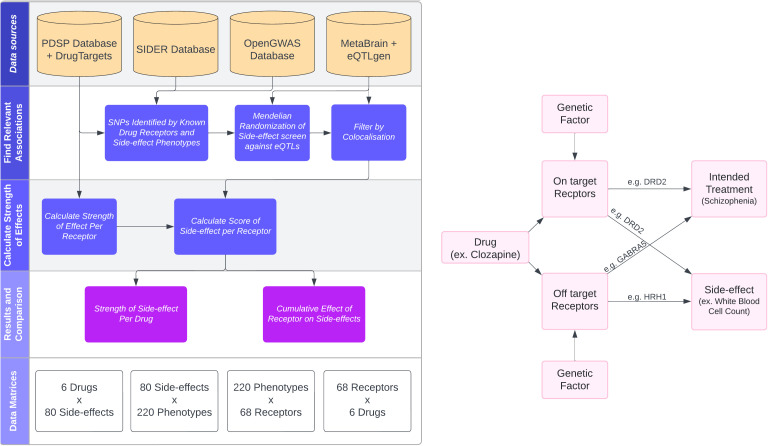
Genetics as a side‑effect detective for antipsychotic medicines


Schematic of the genetics + pharmacology pipeline used to infer drug side-effect mechanisms

Side‑effects are one of the main reasons people stop taking antipsychotic medicines — even when the drugs are helping with symptoms. But when someone reports “I’ve gained weight” or “my blood pressure has changed”, it’s often hard to know whether the drug truly caused it, which biological target is responsible, and whether that target is the one we wanted to hit in the first place.

In work led by Andrew Elmore, published in PLOS Genetics, we combine pharmacology (what receptors a drug binds) with human genetics (natural experiments) to map side‑effects back to specific receptors.