11 posts tagged with "MR"

View All Tags

Genetics as a side‑effect detective for antipsychotic medicines


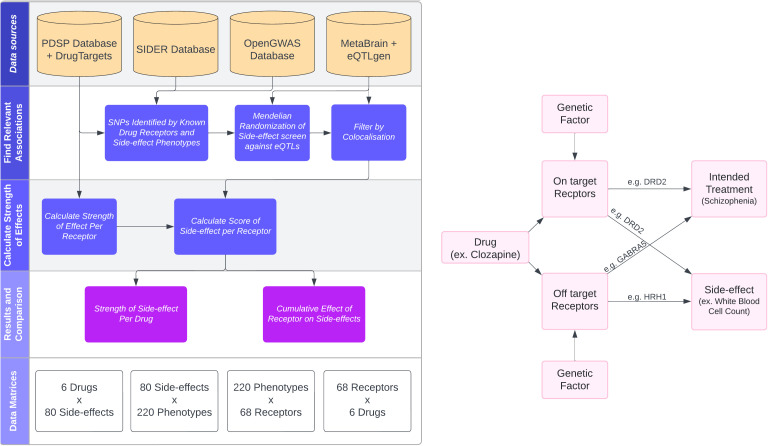
Schematic of the genetics + pharmacology pipeline used to infer drug side-effect mechanisms

Side‑effects are one of the main reasons people stop taking antipsychotic medicines — even when the drugs are helping with symptoms. But when someone reports “I’ve gained weight” or “my blood pressure has changed”, it’s often hard to know whether the drug truly caused it, which biological target is responsible, and whether that target is the one we wanted to hit in the first place.

In work led by Andrew Elmore, published in PLOS Genetics, we combine pharmacology (what receptors a drug binds) with human genetics (natural experiments) to map side‑effects back to specific receptors.

Integrating Mendelian randomization and literature mining to map breast cancer risk factors


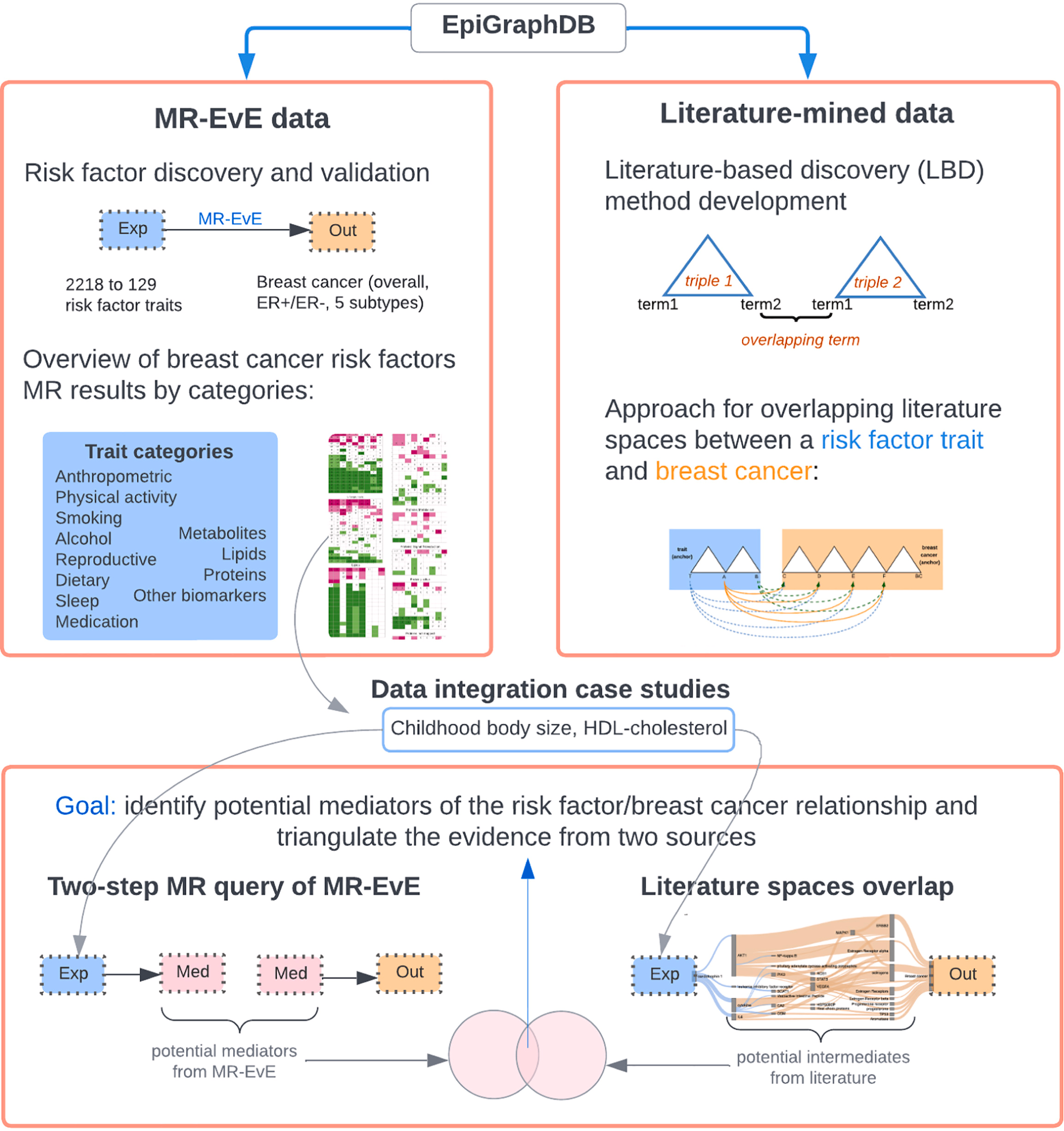
Illustration of integrating MR and literature-mined evidence to identify breast cancer risk pathways.

Breast cancer research spans epidemiology, molecular biology, clinical trials, and a vast and rapidly growing literature. One challenge is triangulating across these evidence types: when different sources point in the same direction, we can be more confident we are seeing something causal rather than correlational.

In a paper led by Marina Vabistsevits published in the Journal of Biomedical Informatics, we show how to bring two complementary sources together:

  1. Mendelian randomization (MR) evidence generated at scale using MR-EvE (“Everything-vs-Everything”), and
  2. Literature-mined relationships stored in EpiGraphDB, our biomedical knowledge graph.

Dissecting blood pressure and BMI a pathway- and tissue-partitioned Mendelian randomization comparison


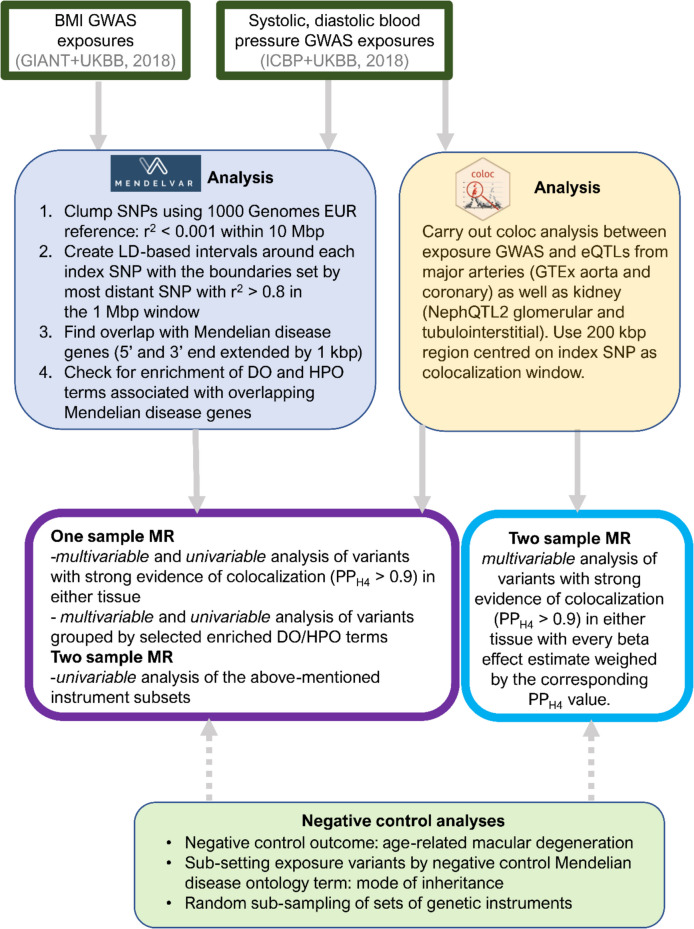
Pathway- vs tissue-partitioned MR, simplified schematic.

Complex traits like blood pressure (BP) and body mass index (BMI) are highly polygenic: hundreds of associated variants can be used as instruments in Mendelian randomization (MR). But those variants don’t all “mean the same thing” biologically—some may act through kidney physiology, others through vasculature, neurobiology, metabolism, and so on. If we can separate instruments into interpretable biological subsets, we can start asking questions like:

  • Which component of BP is most responsible for coronary heart disease risk?
  • Are BMI → atrial fibrillation effects more “metabolic” or more “neuro-behavioural”?

Work led by Genevieve Leyden and Maria Sobczyk and now published in Genome Medicine sets out to do exactly this by comparing two ways of partitioning genetic instruments before running MR.

Proteome-wide Mendelian randomization in global biobank to identify multi-ancestry drug targets


Overview

Genetic studies have been very biased towards populations of European ancestry in western Europe and the United States of America, and this has led to a significant bias in the application of Mendelian randomization (MR) to identify intervention targets. In this project we worked with a leading international genetics consortium, the Global Biobank Meta-analysis Initiative (GBMI) to evaluate the differences in predicted drug target effects between African and European ancestry populations.

Triangulating evidence in health sciences with Annotated Semantic Queries


Update: The ASQ work has now been published in Bioinformatics.

Yi Liu, Tom R Gaunt, Triangulating evidence in health sciences with Annotated Semantic Queries, Bioinformatics, Volume 40, Issue 9, September 2024, btae519, https://doi.org/10.1093/bioinformatics/btae519

Overview

Integrating information from data sources representing different study designs has the potential to strengthen evidence in population health research. However, this concept of evidence “triangulation” presents a number of challenges for systematically identifying and integrating relevant information.

In this medRxiv preprint we present ASQ (Annotated Semantic Queries), a natural language query interface to the integrated biomedical entities and epidemiological evidence in EpiGraphDB . ASQ enables users to extract “claims” from a piece of unstructured text, and then investigate the evidence that could either support, contradict the claims, or offer additional information to the query.

The ASQ approach has the potential to support the rapid review of pre-prints, grant applications, conference abstracts and articles submitted for peer review. ASQ implements strategies to harmonize biomedical entities in different taxonomies and evidence from different sources, to facilitate evidence triangulation and interpretation.

ASQ is openly available at https://asq.epigraphdb.org.

Systematic comparison of Mendelian randomization studies and randomized controlled trials using electronic databases


Overview

Mendelian Randomization (MR) uses genetic instrumental variables to make causal inferences. Whilst sometimes referred to as “nature’s randomized trial”, it has distinct assumptions that make comparisons between the results of MR studies with those of actual randomized controlled trials (RCTs) invaluable.

Evaluating the potential benefits and pitfalls of combining protein and expression quantitative trait loci in evidencing drug targets


Overview

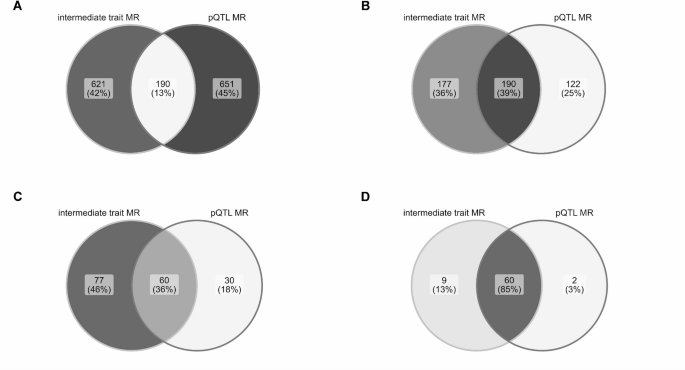
Molecular quantitative trait loci (molQTL), which can provide functional evidence on the mechanisms underlying phenotype-genotype associations, are increasingly used in drug target validation and safety assessment. In particular, protein abundance QTLs (pQTLs) and gene expression QTLs (eQTLs) are the most commonly used for this purpose. However, questions remain on how to best consolidate results from pQTLs and eQTLs for target validation.

Trans-ethnic Mendelian-randomization study reveals causal relationships between cardiometabolic factors and chronic kidney disease


Overview

Most Mendelian randomization (MR) studies focus on European populations because of the wealth of genome-wide association study (GWAS) datasets available from European ancestry population samples, in contrast to other populations. However, new GWAS summary datasets from studies such as Biobank Japan, China Kadoorie Biobank and the Japan Kidney Biobank enable us to run ancestry-specific MR analyses to compare causal effects of risk factors across populations. This approach is important in the use of MR to inform public health priorities and interventions in other populations and sub-populations that have historically been under-represented in research.