Dissecting blood pressure and BMI a pathway- and tissue-partitioned Mendelian randomization comparison
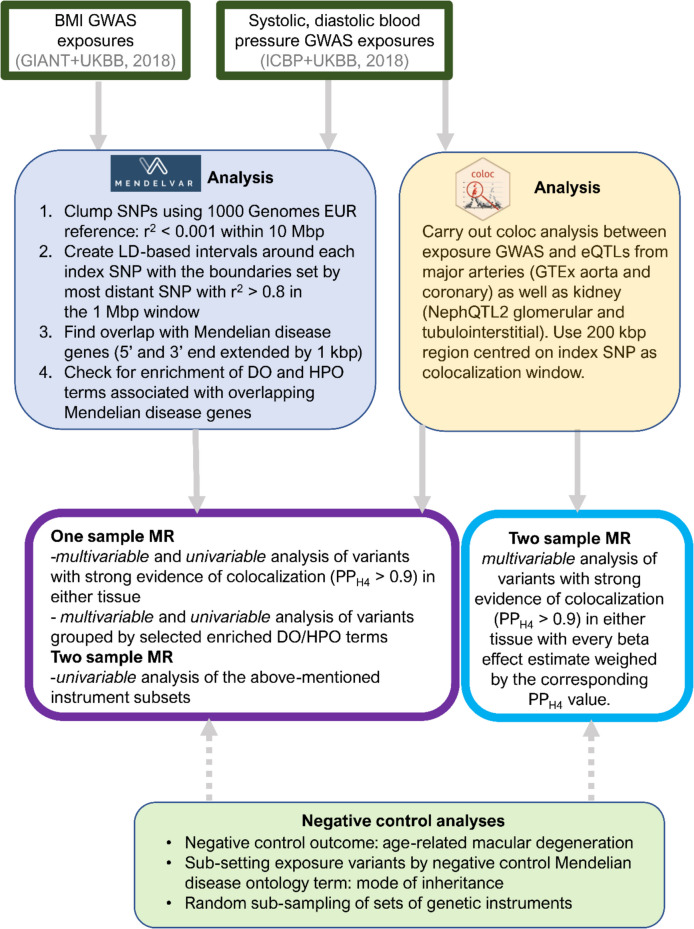
Complex traits like blood pressure (BP) and body mass index (BMI) are highly polygenic: hundreds of associated variants can be used as instruments in Mendelian randomization (MR). But those variants don’t all “mean the same thing” biologically—some may act through kidney physiology, others through vasculature, neurobiology, metabolism, and so on. If we can separate instruments into interpretable biological subsets, we can start asking questions like:
- Which component of BP is most responsible for coronary heart disease risk?
- Are BMI → atrial fibrillation effects more “metabolic” or more “neuro-behavioural”?
Work led by Genevieve Leyden and Maria Sobczyk and now published in Genome Medicine sets out to do exactly this by comparing two ways of partitioning genetic instruments before running MR.