6 posts tagged with "preprint"

View All Tags

Do historic multiomic profiles improve prediction of postoperative complications?


Biobank metabolomic and proteomic data can predict some long-term disease outcomes, but it is less clear whether historic molecular measurements help predict acute events around surgery. In a new medRxiv preprint, Richard Armstrong and colleagues test whether adding metabolomic and proteomic data improves prediction of postoperative complications after major surgery in UK Biobank.
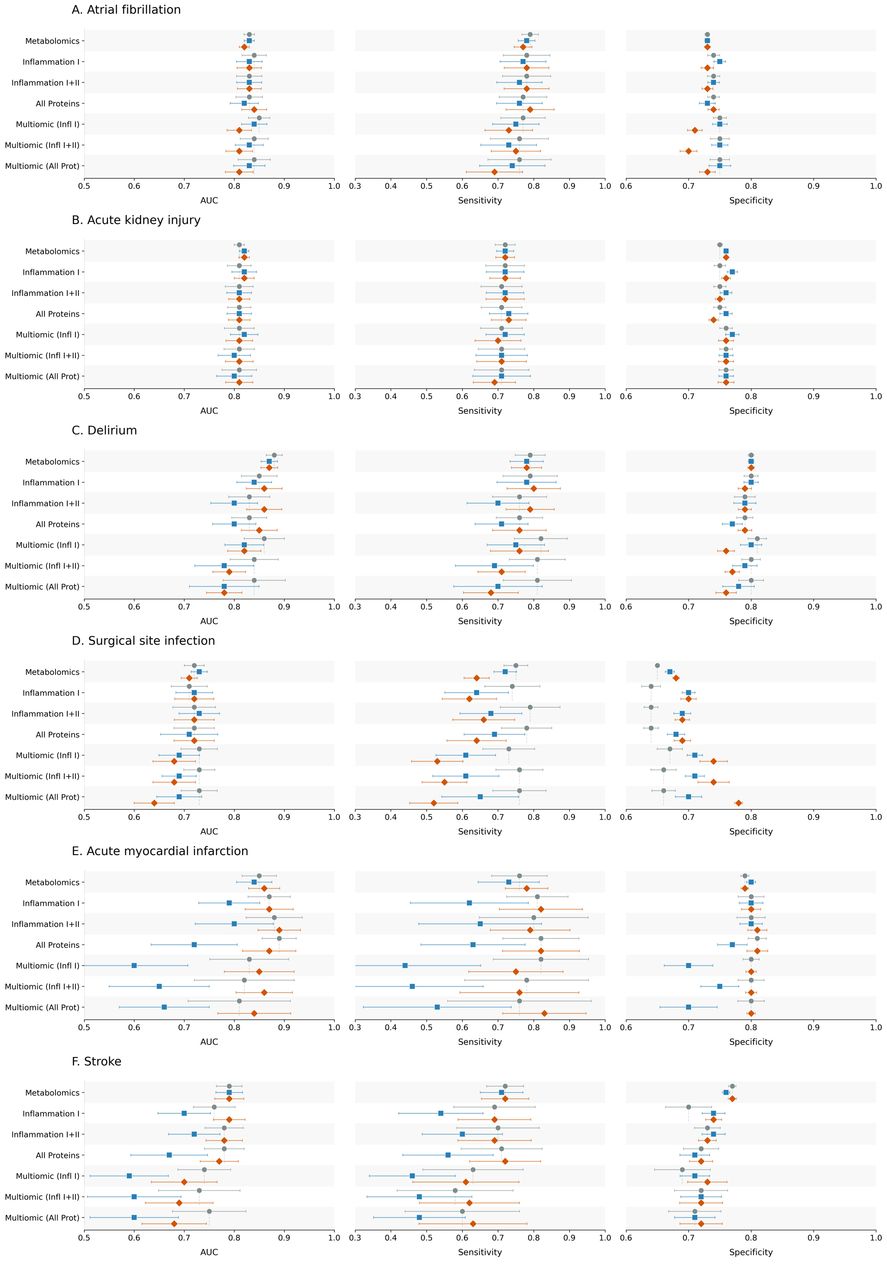
Model performance summaries across postoperative outcomes and omic feature sets.

Figure: Model performance across postoperative outcomes and feature sets, comparing clinical baseline models with metabolomic, proteomic and multiomic additions. Source: Armstrong et al., medRxiv, 2026, Fig. 2 (CC BY-NC-ND 4.0).
Mapping age-dependent genetic influences on DNA methylation


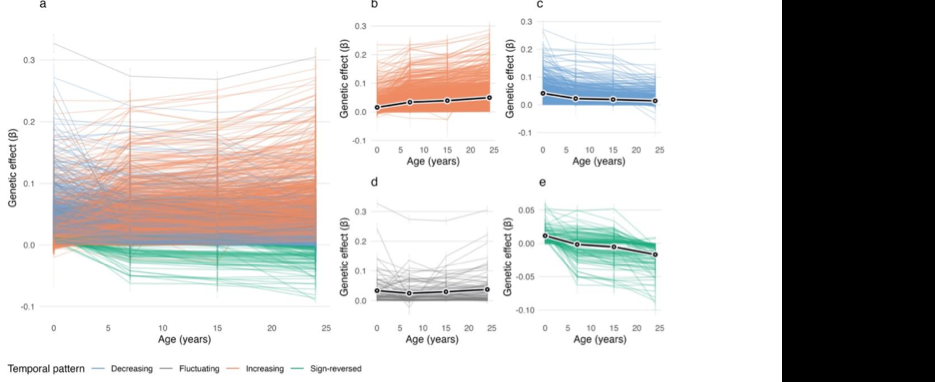
DNA methylation is often analysed as though genetic effects are stable over time, but development and ageing may change how genetic variation influences the methylome. In a new bioRxiv preprint, Yueying Li and colleagues map age-dependent methylation quantitative trait loci (mQTLs) using repeated DNA methylation measures from birth through adulthood.

Trajectory plots showing increasing, decreasing, fluctuating and sign-reversed genetic effects on DNA methylation over age.

Figure: Trajectories of longitudinal mQTL-CpG associations, grouped by temporal pattern, showing genetic effects that increase, decrease, fluctuate or change sign across age. Source: Li et al., bioRxiv, 2026, Fig. 3 (CC BY 4.0).

Building a Human Genotype-Phenotype Map


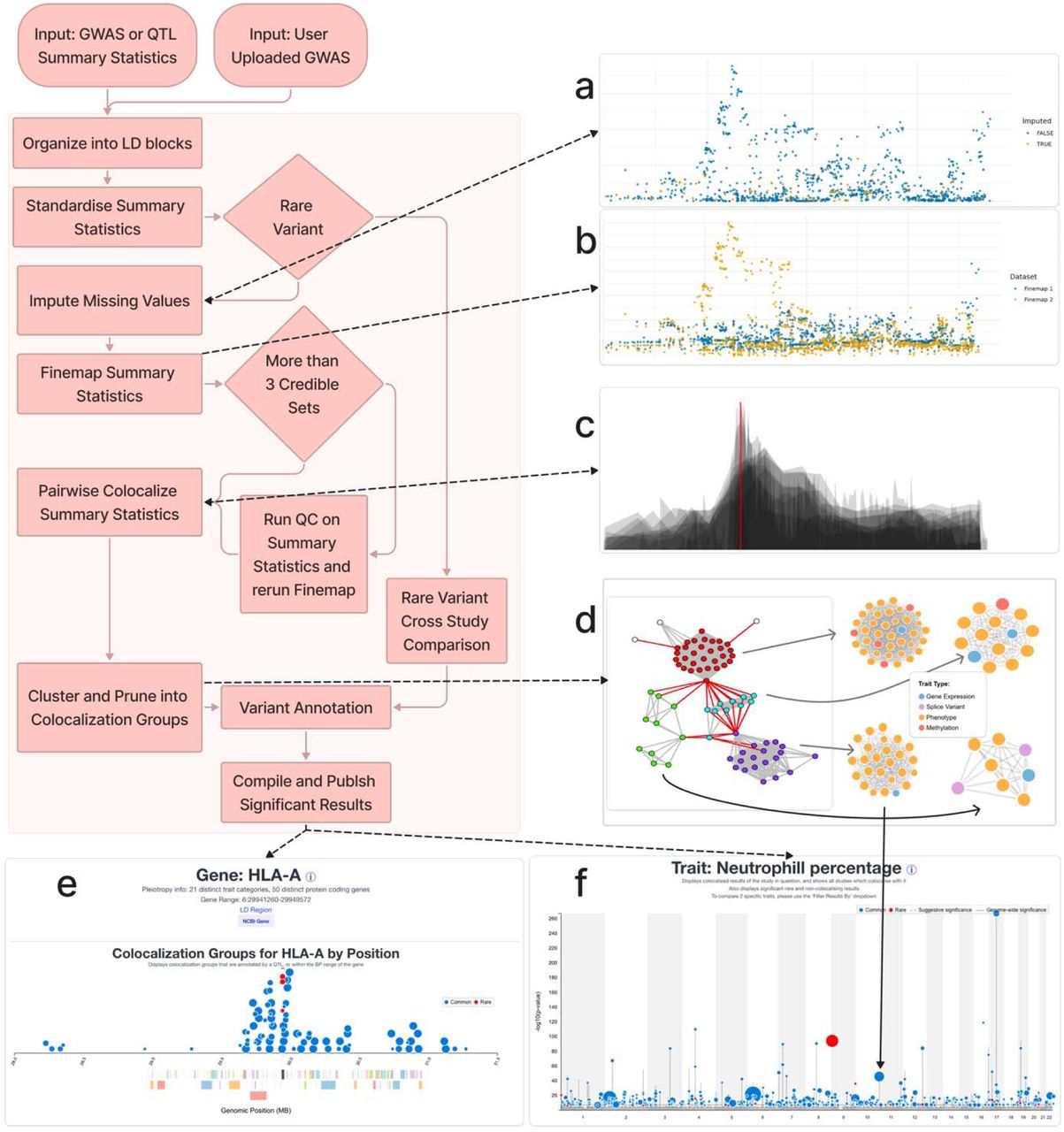
Genome-wide association studies have mapped thousands of genetic associations, but interpreting what those associations mean biologically remains a central challenge. In a new medRxiv preprint, Andrew Elmore, Aimee Hanson, Genevieve Leyden and colleagues introduce the Human Genotype-Phenotype Map (GPMap), an open resource for tracing shared genetic signals across complex traits and molecular measurements.

GPMap processing pipeline from GWAS summary statistics to trait, gene, variant and tissue views.

Figure: GPMap processing pipeline, from GWAS summary statistics through imputation, fine-mapping, colocalisation and views by trait, gene, variant and tissue. Source: Elmore et al., medRxiv, 2026, Fig. 1 (CC BY-ND 4.0).

MR-KG: A Knowledge Graph of Mendelian Randomization Evidence Powered by Large Language Models


📌 Background

Mendelian randomization (MR) is a powerful causal inference method that uses genetic variants as natural experiments to assess causal relationships between putative risk factors and disease outcomes. MR studies are increasingly abundant, but synthesising evidence across them remains challenging due to heterogeneity in reporting, traits examined, and the structure of the published literature.

To address this, Liu, Burton, Gatua, Hemani & Gaunt (2025) introduce MR-KG — a knowledge graph of MR evidence automatically extracted from published studies using large language models (LLMs).

Liu et al. "MR-KG: A knowledge graph of Mendelian randomization evidence powered by large language models". 2025, medRxiv DOI:10.64898/2025.12.14.25342218

Genetic risk factors for postoperative complications after major surgery


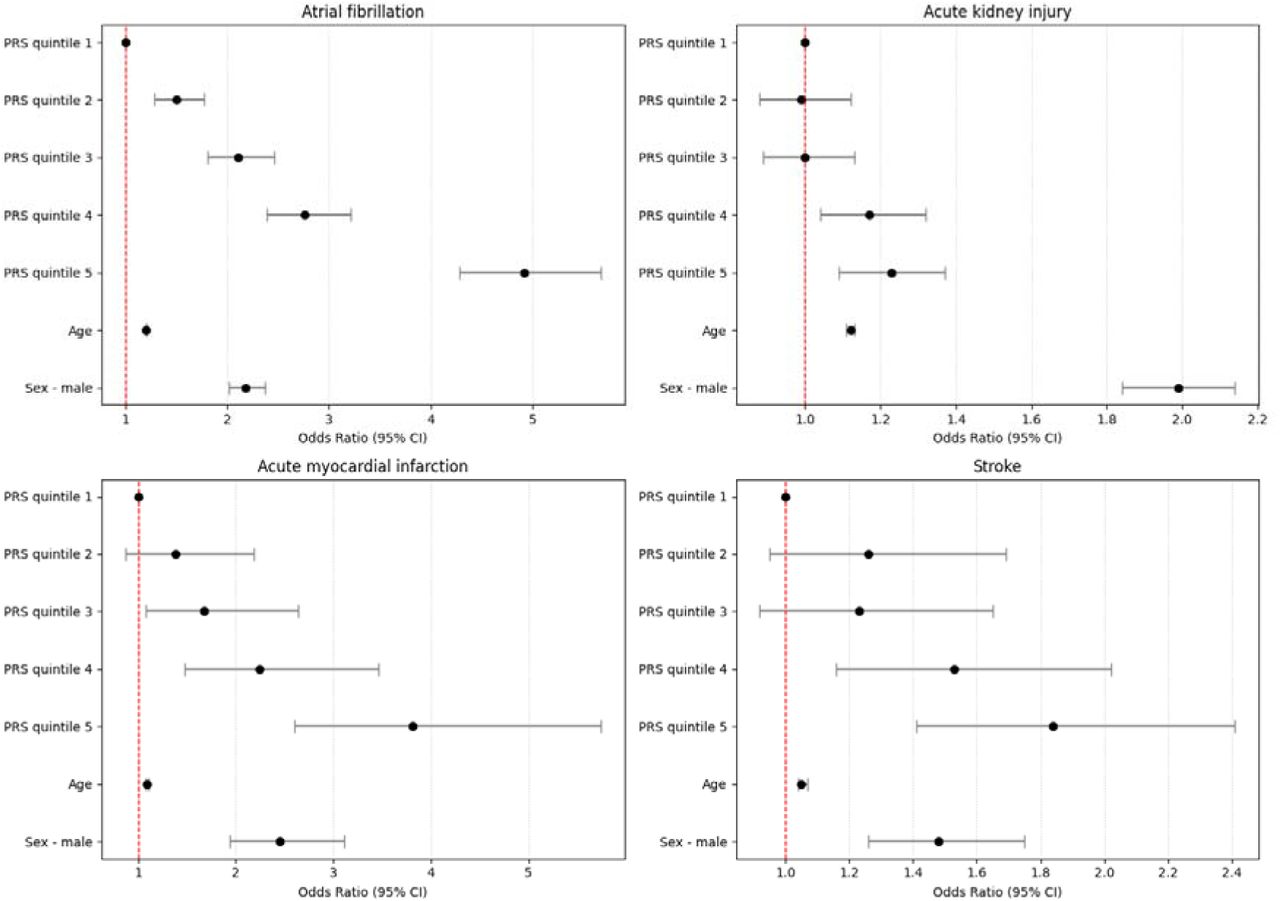
Serious complications after major surgery are common, but it is not always clear how far they reflect the immediate stress of surgery versus a person's underlying susceptibility to the same condition outside the postoperative period. In a medRxiv preprint, Richard Armstrong and colleagues use UK Biobank genetics to examine this question for five common postoperative complications.

Polygenic risk score quintile associations for postoperative complications.

Figure: Association between postoperative complications and increasing polygenic risk score quintile for related non-postoperative phenotypes. Source: Armstrong et al., medRxiv, 2025, Fig. 4 (CC BY-NC-ND 4.0).

M-PreSS: a transparent, open-source approach to study screening in systematic reviews


Overview

Screening thousands of titles and abstracts is often the single biggest bottleneck in a systematic review workflow. In this new medRxiv pre-print, we describe M-PreSS: a model pre-training approach that aims to make screening faster without relying on closed, black-box systems.

The key idea is to start from an open biomedical language model (BlueBERT) and fine-tune it for screening using a Siamese neural network setup, so that the resulting model can generalise across different review topics rather than needing a brand-new model each time.